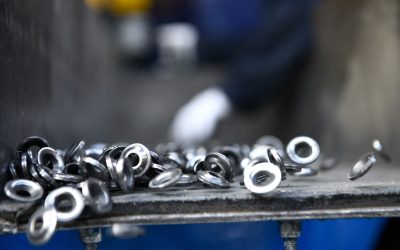
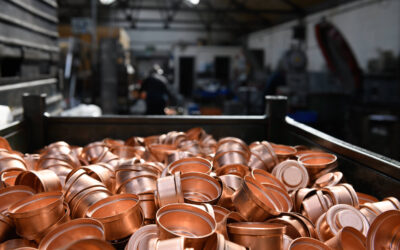
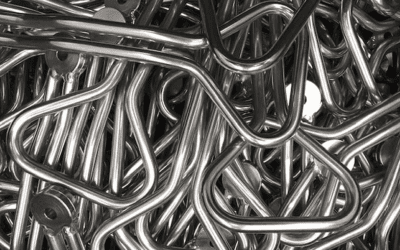
Barrel polishing is a mass finishing process used to smooth, clean, deburr and improve the surface of metal components. Parts are placed inside a rotating barrel with specially selected finishing media and, depending on the process, water and finishing compounds. As the barrel rotates, the components and media tumble together, gradually removing surface imperfections and creating a more consistent finish.
For manufacturers producing large quantities of small or medium-sized components, barrel polishing can provide an efficient alternative to finishing every component individually.
From automotive and aerospace components to precision engineering and general manufacturing, the process can be adapted to suit different materials, component shapes and finishing requirements.
But how does barrel polishing work, which materials can be treated and when should it be chosen over another metal finishing process?
How Does Barrel Polishing Work?
Barrel polishing works by creating controlled contact between components and finishing media inside a rotating barrel.
Components are loaded into the machine alongside media selected according to the material being processed and the required result. Depending on the application, water and specialist compounds may also be introduced.
As the barrel rotates, gravity causes the contents to continuously roll and tumble. The finishing media repeatedly comes into contact with the surfaces of the components.
This action can gradually remove:
- Small burrs
- Sharp edges
- Light surface imperfections
- Minor machining marks
- Discolouration
- Scale and contamination
- Surface roughness
The exact result depends on several variables, including the type and size of media, rotation speed, processing time, component material and desired finish.
This makes barrel polishing a highly adaptable process. Rather than relying on a single standard cycle, the process can be adjusted to suit the components being treated.
What Finishing Media Is Used?
The media inside the barrel plays an important role in determining the final result.
Different media can provide different levels of cutting, smoothing and polishing. Ceramic media, for example, can be used where more aggressive material removal is required, while plastic media can offer a gentler action for certain components.
Steel media can also be used where a bright or burnished surface is required.
The size and shape of the media are equally important.
Small pieces of media may be capable of reaching areas that larger pieces cannot, while larger media can be useful when processing bigger components or when more substantial surface contact is required.
Selecting the appropriate combination requires an understanding of the component, material and desired result.
This is one reason professional testing can be valuable before processing a complete production batch.
What Materials Can Be Barrel Polished?
Barrel polishing can be used with a wide variety of metal components, although the precise process must be matched to the material.
Common metals that may be suitable include:
- Stainless steel
- Mild steel
- Aluminium
- Brass
- Copper
- Zinc
- Various engineering alloys
Different metals behave differently during finishing.
A process designed for stainless steel components, for example, may not be suitable for softer aluminium components. Media, compounds and processing times therefore need to be carefully selected.
The geometry of the component is another consideration.
Small manufactured components are particularly well suited to mass finishing because many parts can be processed simultaneously. However, very delicate components or parts with complex features may require a different approach.
What Are the Main Benefits of Barrel Polishing?
One of the biggest advantages of barrel polishing is its ability to process multiple components simultaneously.
For manufacturers dealing with substantial production volumes, manually finishing every individual component would require considerable time and labour.
Barrel polishing makes it possible to process batches together.
Consistent Surface Finishing
Consistency is extremely important within manufacturing.
When components form part of a larger assembly, substantial variations in their finish can create problems with appearance, handling or subsequent production processes.
A correctly configured barrel polishing process can produce repeatable results across large quantities of components.
Efficient Batch Processing
Processing components in batches can significantly improve production efficiency compared with finishing each part individually.
This makes barrel polishing particularly attractive for companies manufacturing large quantities of smaller components.
Deburring and Edge Smoothing
Manufacturing processes such as machining, cutting, stamping and pressing can leave unwanted burrs or sharp edges.
Removing these imperfections can make components safer to handle and better prepared for assembly or additional finishing.
For applications where burr removal is the primary requirement, vibro deburring may also be considered.
Improved Appearance
Barrel polishing can improve the overall appearance and consistency of metal components.
Depending on the process and media selected, it can help produce a smoother, cleaner or brighter surface.
This can be particularly important for components that remain visible within the finished product.
Preparation for Further Finishing
Barrel polishing does not always represent the final manufacturing stage.
It can also prepare components for processes such as plating, coating, painting or assembly by creating a cleaner and more uniform surface.
Barrel Polishing vs Vibro Deburring
Barrel polishing and vibratory finishing are both mass finishing processes, but the movement of the components and media differs.
Inside a rotating barrel, the components tumble over one another with the finishing media.
Vibratory finishing instead uses a vibrating bowl or trough to move the media and components.
The right process depends on the component and desired result.
Vibro deburring is particularly useful when the objective is to remove burrs, smooth sharp edges and prepare manufactured components for subsequent operations.
Barrel polishing can be particularly effective for batch processing smaller components where gradual smoothing and polishing are required.
Rather than assuming one method is always better, manufacturers should consider component geometry, material, production quantities and required surface finish.
What About Ball Burnishing?
Ball burnishing is another metal finishing option that can sometimes be considered when a brighter, smoother finish is required.
Rather than relying primarily on abrasive material removal, burnishing uses pressure and contact with specialised media to improve the surface.
The process can produce an attractive lustre while also improving surface characteristics.
This makes it particularly useful when appearance is an important part of the specification.
Again, the best option depends on what the component needs to achieve rather than simply which process can make the metal appear smoother.
Barrel Polishing vs Manual Polishing
Manual polishing still has an important role within metal finishing, particularly for large components, one-off pieces or applications requiring detailed attention to particular areas.
However, it becomes much less practical when hundreds or thousands of smaller components require a consistent finish.
Barrel polishing offers several advantages for production work because multiple components can be treated simultaneously.
It also reduces reliance on individual operators producing exactly the same finish repeatedly.
For high-volume manufacturing, this combination of efficiency and repeatability can make mass finishing considerably more practical.
Which Industries Use Barrel Polishing?
Barrel polishing is used throughout manufacturing and engineering wherever components require improved surface quality.
Automotive
The automotive sector relies on large quantities of manufactured metal components, many of which require deburring, smoothing, cleaning or polishing before assembly.
Mass finishing can provide the repeatability required for production environments.
Aerospace
Surface quality is particularly important for precision-engineered aerospace components.
Where barrel polishing is appropriate for the component specification, controlled finishing can help create consistent surfaces across production batches.
Motorsport
Motorsport components frequently combine precision manufacturing with demanding performance requirements.
Metal finishing can be used to remove manufacturing imperfections and prepare components for assembly or subsequent treatment.
General Manufacturing
Pressings, machined components, fasteners and other manufactured parts can all require finishing after production.
Barrel polishing provides manufacturers with an efficient method of processing quantities of suitable components.
Architectural and Decorative Products
Appearance can be just as important as functionality for architectural metalwork and decorative components.
Polishing processes can help produce a more consistent and visually appealing surface.
Supersheen works with businesses across automotive, architectural, aerospace, motorsport and manufacturing applications, providing a range of specialist metal finishing services.
When Should You Choose Barrel Polishing?
Barrel polishing should be considered when you need to process batches of suitable components and achieve a consistent improvement to their surface.
It can be particularly effective when:
- Large quantities of components require finishing
- Small burrs or sharp edges need removing
- A smoother surface is required
- Components need preparing for further treatment
- Manual polishing would be too time-consuming
- Consistency across a production batch is important
- The appearance of the component needs improving
However, it will not necessarily be the best solution for every component.
Size, geometry, material, tolerances and desired finish should all be considered before deciding on a finishing method.
Testing the Process Before Production
Because every component is different, testing can be extremely valuable.
Changing the media, compound, processing time or finishing method can significantly alter the result.
At Supersheen, businesses can submit components for free process testing before committing to production. A suitable finishing programme can then be developed around the component and required finish.
This can help determine whether barrel polishing or another process provides the best result.
Supersheen has more than 50 years of experience in metal finishing and can provide advice across barrel polishing, vibro deburring, vapour degreasing, ball burnishing, derusting, descaling and other finishing processes.
Find the Right Finish for Your Components
Barrel polishing remains an effective solution for manufacturers that need to improve the surface quality of multiple components efficiently and consistently.
By combining components with carefully selected media inside a rotating barrel, the process can remove minor imperfections, smooth edges and improve the overall appearance of manufactured parts.
The key to achieving the best result is selecting the right process for the component.
Material, size, shape, production quantity and required finish should all be assessed before processing begins.
If you are unsure whether barrel polishing is suitable for your components, Supersheen can carry out free sample processing to identify an appropriate finishing method before moving into full production.
Contact Supersheen to discuss your components or arrange free sample processing.